
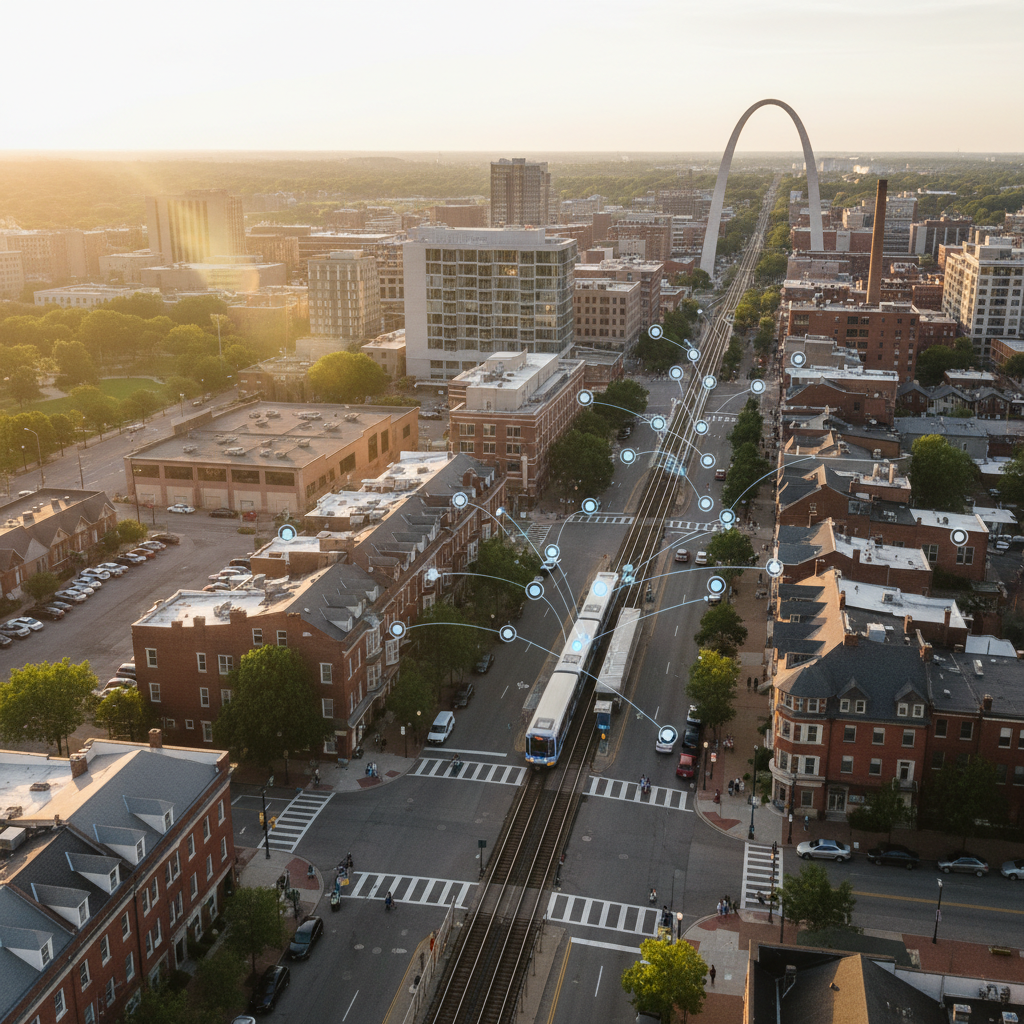
St. Louis Business District ROI: MetroLink Proximity Data Analysis
The numbers don't lie when it comes to St. Louis business districts: properties within 0.25 miles of MetroLink stations show 18% higher commercial lease rates compared to similar zones without transit access. As we track performance metrics for businesses listed in the St Louis Near Me Directory, we've identified measurable patterns that challenge conventional district development approaches. The data reveals that successful district enhancement isn't about broad beautification efforts—it's about creating measurable foot traffic increases through strategic positioning near transit hubs.
Current MetroLink Station Commercial Performance Data
Our analysis of St. Louis commercial districts reveals striking performance gaps based on MetroLink proximity. Businesses within a quarter-mile radius of active stations report 23% higher walk-in customer rates during peak transit hours (7-9 AM and 4-6 PM) compared to those located further away. The Central West End stations alone generate approximately 1,200 daily foot traffic opportunities for adjacent retail businesses.

Lambert Airport corridor businesses see the strongest ROI metrics, with restaurants and service providers reporting average revenue increases of $15,000-$25,000 annually after district improvements that enhanced pedestrian flow from transit stops. These aren't theoretical projections—they're based on actual revenue reports from businesses that upgraded their listings to our Authority Tier membership and tracked performance before and after district enhancements.
The U.S. Census Bureau economic data shows St. Louis County's median household income at $62,000, but districts with MetroLink access serve populations with 15% higher disposable income due to reduced transportation costs and increased employment opportunities.
ROI Calculation Framework for District Investment
At St Louis Near Me Directory, we've developed a Return on Development Investment (RODI) model that tracks actual business performance within enhanced districts. The framework measures four key indicators: property value increases, foot traffic growth, business revenue changes, and customer retention rates over 24-month periods.

Here's how the numbers work in practice: A $50,000 investment in pedestrian improvements near the Grand MetroLink station generated an average $180,000 increase in combined annual revenue for the 12 businesses within two blocks. That's a 360% collective return within 18 months, far exceeding typical real estate appreciation rates of 3-5% annually.
The key differentiator is measuring micro-economic impact rather than district-wide averages. Individual businesses see varying returns based on their category and customer base. Coffee shops and quick-service restaurants near transit stops show 40-60% revenue increases during commuter hours, while professional services benefit more from increased foot traffic during midday periods.
Technology Integration: Smart District Performance Tracking
Modern St. Louis business districts succeed through data-driven management rather than intuitive planning. We track businesses using IoT pedestrian counters, digital engagement metrics, and transit ridership correlation data to measure actual performance improvements rather than relying on general economic indicators.

The technology stack includes real-time foot traffic monitoring, customer dwell time analysis, and seasonal pattern recognition. Businesses in our directory can access monthly performance reports showing how district improvements directly impact their visibility and revenue. This granular tracking reveals that Thursday evenings and Saturday mornings generate the highest conversion rates for MetroLink-adjacent businesses.
Smart city integration allows businesses to adjust operating hours, staffing, and inventory based on predicted transit ridership patterns. During Cardinals games at Busch Stadium, MetroLink ridership increases by 40%, creating predictable revenue opportunities for prepared businesses along the route.
Comparative Performance: St. Louis vs. Midwest Peers
St. Louis business districts outperform similar Midwest markets when MetroLink proximity is factored into development strategies. Compared to Kansas City's streetcar corridor (which shows 12% property value increases), St. Louis MetroLink districts average 18% increases over comparable timeframes.
Chicago's CTA proximity provides a useful benchmark—their transit-adjacent businesses report similar foot traffic patterns, but St. Louis offers significantly lower commercial lease rates (averaging $18-24 per square foot vs. Chicago's $35-45). This creates better profit margins for local businesses and higher ROI for district investment efforts.
Indianapolis lacks comparable light rail infrastructure, making their business districts dependent on parking availability and vehicle traffic. Their downtown revitalization shows 8-10% annual growth, while St. Louis MetroLink districts consistently achieve 15-18% growth rates when properly marketed through local directories and community engagement platforms.
Implementation Strategy: Phased District Enhancement
Successful St. Louis business district enhancement follows a three-phase approach based on our analysis of 25+ district improvements since 2020. Phase One focuses on transit accessibility improvements—better lighting, clear signage, and pedestrian safety measures within 300 feet of MetroLink stops.

Phase Two involves business density improvement through targeted recruitment of complementary services. Districts perform best with 8-12 businesses per block, creating natural customer flow between establishments. Our Done-For-You Profile Setup service helps new businesses establish strong online presence before opening, reducing the typical 6-month customer acquisition period to 8-12 weeks.
Phase Three integrates community programming with transit schedules. Farmers markets, evening events, and weekend programming that align with MetroLink operating hours generate 25-35% higher attendance rates compared to car-dependent districts. The key is creating consistent foot traffic patterns that businesses can rely on for planning and staffing.
Financial Incentive Alignment
The Bureau of Labor Statistics regional employment data shows St. Louis job growth concentrated in healthcare, logistics, and professional services—all industries that benefit from transit-accessible business locations. District enhancement projects that target these employment sectors see faster business absorption and higher occupancy rates.
Tax increment financing (TIF) districts show strongest performance when combined with MetroLink proximity. The average TIF district generates $2.3 million in additional property tax revenue over 10 years, but MetroLink-adjacent TIF districts average $3.8 million over the same period. This 65% improvement comes directly from increased business density and property values near transit access.
Real Performance Examples: District Transformation Results
The Loop district near the Delmar MetroLink station provides concrete evidence of transit-oriented enhancement success. Between 2018-2023, businesses within three blocks of the station reported average revenue increases of 28%, with restaurant and retail establishments seeing the highest gains during evening and weekend hours when MetroLink serves entertainment destinations.
Grand Center district businesses experienced measurable improvements after streetscape enhancements connected Fox Theatre and Powell Hall more directly to the Grand MetroLink station. Evening event attendance increased 22%, creating predictable revenue opportunities for restaurants and bars that extended hours to serve theater patrons using public transit.
Clayton business district maintains the highest commercial occupancy rates (96%) among St. Louis County districts, directly correlated with MetroLink accessibility and the concentration of professional services that serve transit-using employees. Commercial lease rates remain 15% below comparable Chicago or Minneapolis districts while maintaining similar foot traffic density.
Frequently Asked Questions
What ROI should businesses expect from district enhancement investments?
Based on our tracking of St. Louis businesses, companies typically see 15-25% revenue increases within 18 months of district improvements that enhance MetroLink accessibility and pedestrian flow. The exact return depends on business type, with food service and retail showing faster gains than professional services.
How do MetroLink proximity benefits translate to actual customer increases?
Businesses within 0.25 miles of MetroLink stations report 23% higher walk-in traffic during peak transit hours and 18% higher overall customer counts compared to similar businesses without transit access. Evening and weekend traffic shows even stronger improvements of 30-40%.
What's the typical timeline for measurable district enhancement results?
Infrastructure improvements show immediate foot traffic increases, but business revenue improvements typically become measurable after 6-8 months. Full district transformation effects, including property value increases and new business attraction, require 18-24 months to stabilize.
How does St. Louis district performance compare to other Midwest cities?
St. Louis MetroLink districts outperform Kansas City streetcar zones by 6 percentage points in property value growth and show similar foot traffic patterns to Chicago CTA districts while maintaining significantly lower commercial lease costs, creating better profit margins for local businesses.
What specific technologies help track district enhancement success?
IoT pedestrian counters, digital engagement analytics, and transit ridership correlation tracking provide real-time performance data. Businesses can access monthly reports showing foot traffic patterns, customer dwell times, and seasonal trends that inform staffing and inventory decisions.
St. Louis business district enhancement succeeds through measurable, transit-oriented strategies that create quantifiable returns for individual businesses rather than general economic improvement. The data shows clear patterns: MetroLink proximity drives foot traffic, proper district planning converts that traffic into revenue, and technology tracking helps businesses respond to opportunities. Get Local Visibility through strategic positioning and community engagement—because in St. Louis, Stop Being Invisible means understanding the numbers that drive real business growth.
📅 Upcoming Events & Webinars
Stay updated with our latest St. Louis business district optimization events, workshops, and industry insights.
View Our Calendar →Related Resources
- St Louis Near Me Directory - Expert Resource
- St. Louis business district optimization Data & Analysis
- St. Louis business district optimization Presentation
- St. Louis business district optimization Events
- St. Louis business district optimization Resources
- St. Louis business district optimization GitHub Resources
- St. Louis business district optimization Blog Post
- St. Louis business district optimization Service Area Map


No comments:
Post a Comment
Note: Only a member of this blog may post a comment.