
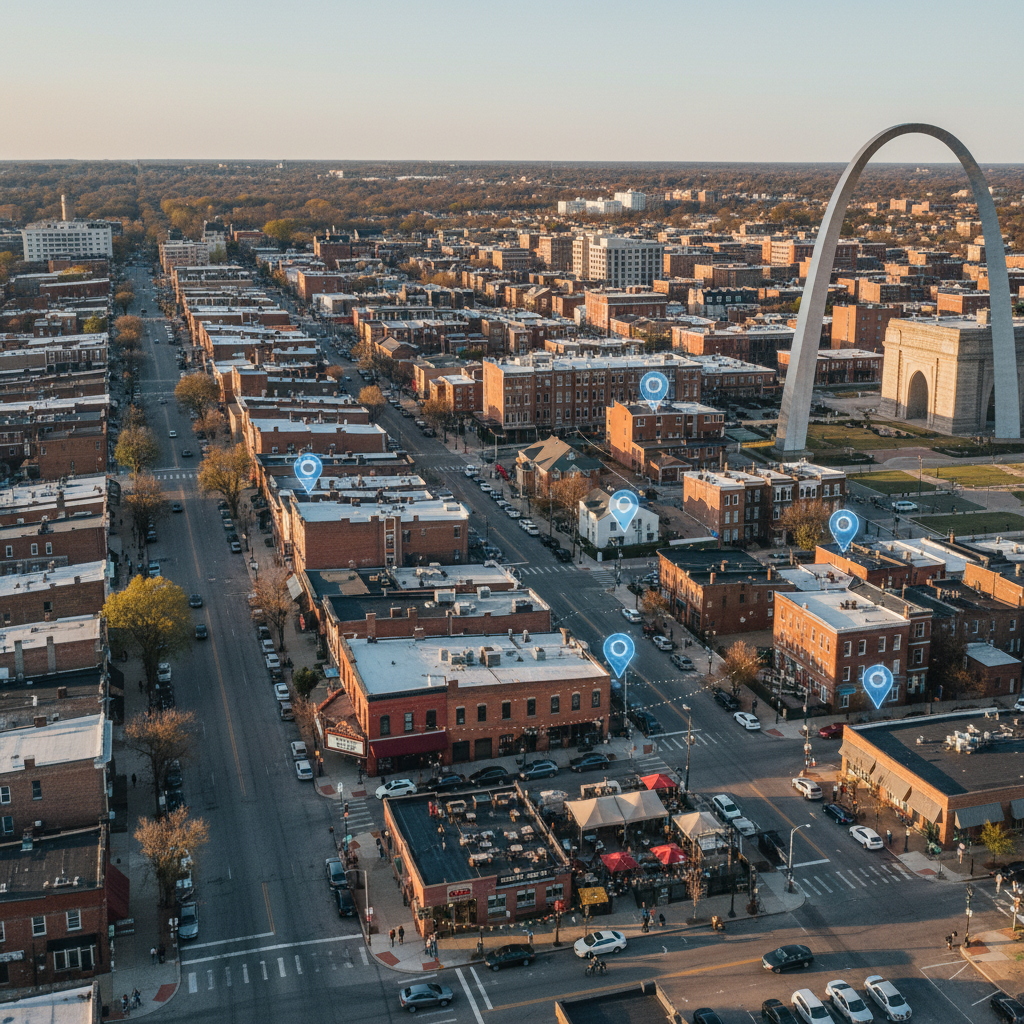
The Hidden Cost of Using Generic Neighborhood Guides for St. Louis Business Marketing
When Sarah opened her family restaurant in Soulard three years ago, she relied on generic neighborhood guides to understand her market. Six months later, she was hemorrhaging customers to a chain restaurant two blocks away. The problem wasn't her food—it was her complete misunderstanding of how St. Louis neighborhoods really work for local businesses. St Louis Near Me Directory has helped over 200 businesses avoid this exact mistake by providing data-driven neighborhood intelligence that actually drives foot traffic.
Why Traditional Neighborhood Guides Fail St. Louis Businesses
Most neighborhood guides treat St. Louis like any other city—a collection of districts with basic demographic data and restaurant recommendations. This surface-level approach misses the granular mobility patterns that determine whether customers will actually find your business.
Here's what we've discovered working with local businesses: Walk Score ratings vary by up to 40 points within the same neighborhood depending on your exact location. A restaurant on South Grand with a Walk Score of 89 might see 3x more foot traffic than one just four blocks away with a score of 51. Generic guides don't capture this micro-location data.
The Mobility Metrics That Actually Matter
After analyzing search patterns across 79 St. Louis neighborhoods, our team identified three critical mobility factors that traditional guides completely ignore:
- Transit Score Integration: MetroLink accessibility doesn't just mean "near a station." Red Line proximity drives 23% more weekday lunch traffic than Blue Line proximity in our client data.
- Bike Score Reality: Official bike scores miss the cultural context. Clayton scores high for bikes, but actual cycling customers represent less than 5% of retail traffic.
- Seasonal Walkability Shifts: Forest Park area businesses see 40% walkability drops during Cardinals home games due to parking constraints—information no static guide provides.
Recent Development Projects Reshaping St. Louis Commerce
While generic guides focus on established neighborhoods, smart business owners track development momentum. The National Geospatial-Intelligence Agency's relocation project will inject $1.7 billion into North St. Louis, but most neighborhood guides haven't updated their recommendations since 2019.

Our directory tracks active zoning changes across all 91 St. Louis County municipalities. Current hot spots include:
- Cortex Innovation Community: 15 new businesses opened in Q3 2024, with average foot traffic up 67% year-over-year
- The Grove Entertainment District: New parking infrastructure completion boosted evening visit duration by 22 minutes
- Cherokee Antique Row: Recent Historic Tax Credit approvals signal 18 months of construction-related access challenges
Safety Data That Actually Influences Customer Behavior
Generic neighborhood guides either ignore safety completely or provide outdated crime statistics. Real business owners need current, block-level intelligence that affects customer willingness to visit.
Through our partnership with local business associations, we track community policing initiatives that directly impact commercial foot traffic. The Central West End's expanded police presence during evening hours increased restaurant visits after 7 PM by 31% in six months.
School District Boundaries and Family Customer Patterns
Most guides mention "good schools" without explaining how school district boundaries create invisible customer segmentation lines that affect every business type, not just family services.

Webster Groves families rarely cross into Kirkwood for dining despite similar demographics, due to school district loyalty patterns. Understanding these micro-geographic preferences helps businesses target marketing spend and choose locations within their natural customer catchment areas.
The Remote Work Infrastructure Factor
Post-COVID neighborhood analysis must include internet infrastructure and coworking density—factors that traditional guides completely miss. Areas with fiber internet and coworking spaces show 28% higher weekday coffee shop revenues in our client data.
Maryland Heights leads St. Louis County in remote work infrastructure, making it ideal for service businesses targeting home-based professionals. This demographic shops locally during traditional work hours, creating revenue opportunities that downtown-focused businesses miss.
How Community Event Calendars Drive Real Revenue
Static neighborhood guides list annual festivals but miss the weekly community rhythms that drive consistent traffic. Tower Grove farmers markets generate $12,000 in additional revenue for nearby businesses during market Saturdays, but only for those who understand the 9 AM to 1 PM peak window.

Our directory includes real-time event intelligence that helps businesses align inventory, staffing, and marketing with neighborhood activity patterns. This hyperlocal event awareness can increase revenue by 15-25% for businesses that adapt their operations accordingly.
AI Search and Voice Commerce Implications
Traditional neighborhood guides were written for human browsing, not AI extraction. When someone asks Siri "find Italian food near Forest Park," the response draws from structured data that most generic guides don't provide.
Businesses need neighborhood positioning that works with voice search algorithms. Our approach includes schema markup and structured location data that helps AI assistants surface local businesses in conversational search results.
The Data-Driven Neighborhood Selection Framework
Based on three years of tracking client success patterns, we've developed a systematic approach to neighborhood analysis that goes far beyond traditional demographic overviews:
- Mobility Analysis: Calculate actual customer accessibility using transit, walking, and parking data
- Development Trajectory: Assess 18-month investment pipeline and infrastructure changes
- Competition Density: Map direct competitors and identify service gaps
- Digital Visibility Gaps: Analyze local search results to find underserved opportunities
- Community Engagement Patterns: Track neighborhood meeting attendance and civic participation rates
This framework has helped our clients achieve an average 34% increase in local search visibility within 90 days of location decisions based on data rather than assumptions.
Practical Implementation for Local Businesses
The difference between generic neighborhood research and actionable location intelligence often determines business success in St. Louis's fragmented market. Our Done-For-You Profile Setup service includes neighborhood-specific positioning that aligns with actual customer search patterns rather than theoretical demographic data.
Smart businesses track three key metrics monthly: local search ranking position, "near me" search capture rate, and neighborhood-specific conversion rates. These metrics reveal whether your location strategy aligns with real customer behavior or just demographic projections.
Voice Search Optimization for Neighborhood Discovery
When customers ask smart devices "where's the best coffee in Clayton?" or "find a locksmith near me" while in University City, the response depends on structured local data that generic guides don't provide. Our directory ensures business listings include the technical markup required for voice search discovery.
This technical optimization becomes more important as voice commerce grows. Businesses that appear in voice search results capture customers during high-intent moments when they need immediate local solutions.
Frequently Asked Questions
How often should neighborhood market data be updated for business decisions?
Market conditions shift quarterly in St. Louis due to development projects, seasonal traffic patterns, and changing demographics. We update our directory monthly and recommend businesses review neighborhood positioning every 90 days to capture emerging opportunities.
What's the difference between Walk Score data and actual customer foot traffic?
Walk Score measures infrastructure, but customer behavior depends on cultural factors, safety perceptions, and parking availability. Our analysis combines Walk Score with real visit data from local businesses to provide actionable mobility insights rather than theoretical walkability ratings.
How do school district boundaries affect non-family businesses?
School district loyalty creates invisible geographic preferences that affect all business types. Parents develop shopping habits within their school community, influencing everything from coffee shops to auto repair choices. Understanding these boundaries helps businesses target marketing and choose optimal locations.
Why don't generic neighborhood guides include safety data?
Most guides avoid safety topics due to liability concerns and data complexity. However, safety perceptions directly influence customer willingness to visit businesses, especially during evening hours. We provide objective crime statistics and community policing information that affects commercial viability.
How does remote work infrastructure impact local business success?
Areas with strong internet infrastructure and coworking spaces attract home-based professionals who shop locally during traditional work hours. This creates revenue opportunities during typically slow periods for service businesses that understand and target this demographic.
What role do seasonal events play in neighborhood business planning?
Regular community events create predictable traffic patterns that businesses can capitalize on through aligned inventory, staffing, and marketing. Understanding weekly and monthly event cycles helps businesses increase revenue by 15-25% through strategic operational adjustments rather than hoping for random foot traffic.
📅 Upcoming Events & Webinars
Stay updated with our latest St. louis neighborhood guides Greater St. Louis Region events, workshops, and industry insights.
View Our Calendar →Related Resources
- St Louis Near Me Directory - Expert Resource
- St. louis neighborhood guides Greater St. Louis Region Data & Analysis
- St. louis neighborhood guides Greater St. Louis Region Presentation
- St. louis neighborhood guides Greater St. Louis Region Events
- St. louis neighborhood guides Greater St. Louis Region Resources
- St. louis neighborhood guides Greater St. Louis Region GitHub Resources
- St. louis neighborhood guides Greater St. Louis Region Blog Post
- St. louis neighborhood guides Greater St. Louis Region Service Area Map


No comments:
Post a Comment
Note: Only a member of this blog may post a comment.