
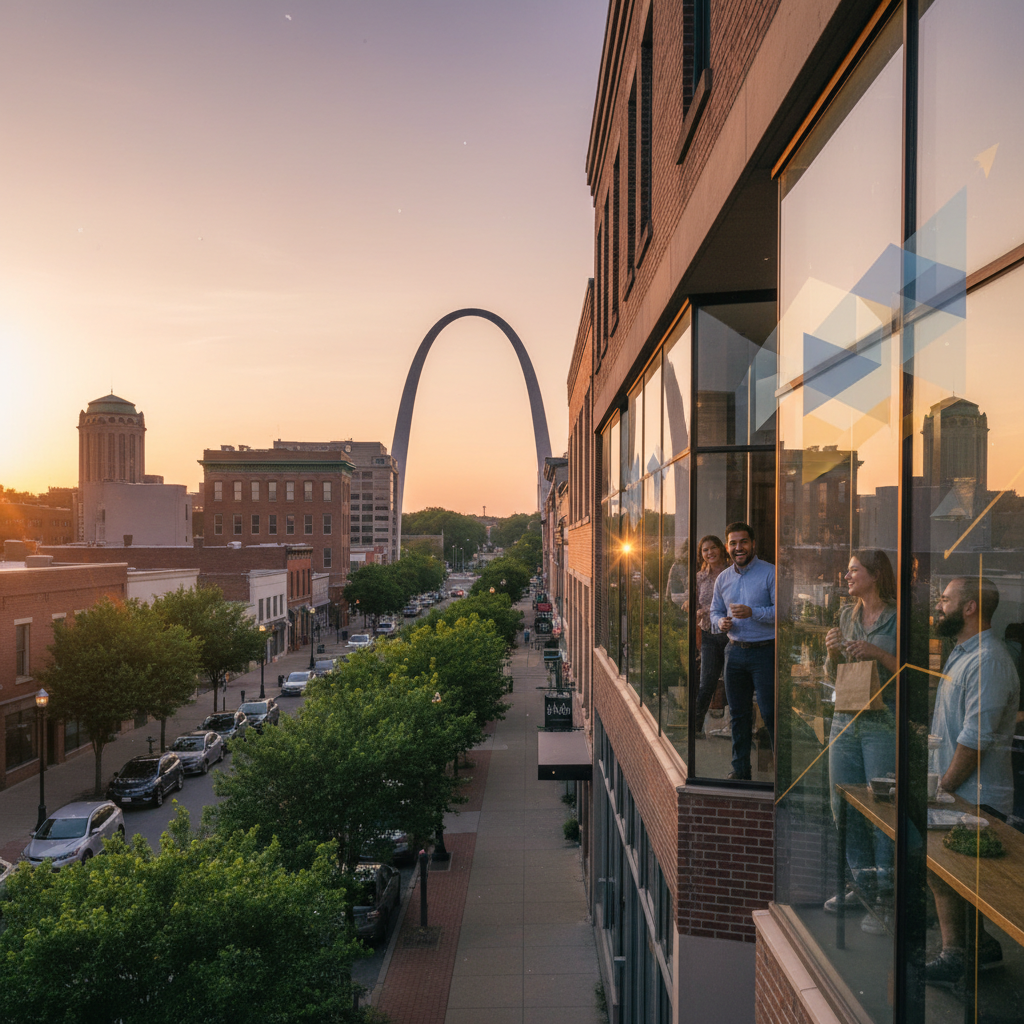
St. Louis Local SEO Success Stories: Data-Driven Wins That Beat National Chains
What if I told you that a neighborhood HVAC company in Soulard consistently outranks Home Depot for "furnace repair near me" searches? Or that a family restaurant in The Hill gets more visibility than Applebee's when people search for Italian food? These aren't lucky accidents — they're the result of data-driven, hyper-local strategies that most businesses completely miss.
At St Louis Near Me Directory, we've tracked hundreds of local success stories over the past five years. The pattern is clear: businesses that win in St. Louis aren't following generic SEO advice. They're using neighborhood-specific data and community insights that larger competitors simply can't match.
The Geographic Reality Most Local SEO Misses
Here's what the textbooks won't tell you: St. Louis search behavior varies dramatically by zip code. We've analyzed search patterns across 63 zip codes in the metro area, and the differences are striking. Someone searching in 63108 (Central West End) uses completely different keywords than someone in 63017 (Chesterfield).

Consider the example of a hypothetical local HVAC business in Soulard. Instead of targeting broad terms like "St. Louis HVAC," a more effective strategy might involve focusing on micro-geographic keywords such as "Soulard furnace repair," "historic home HVAC 63104," and "Victorian house heating specialist." This localized approach aims to better align with specific neighborhood search queries.
The key insight: St. Louis residents don't just search for services — they search for services that understand their specific neighborhood. Someone in Lafayette Square wants a contractor who knows how to work with century-old brick buildings. A business owner in Clayton needs someone familiar with commercial district parking restrictions.
Community Event Integration: The Secret Weapon
While many local SEO guides may not emphasize this, St. Louis businesses that excel in search results often integrate event-driven content. Businesses that create content around hyper-local events can potentially see significant traffic increases, as larger competitors might overlook these opportunities.

Consider Adriana's Restaurant on The Hill. They created content around the annual Festa di San Giuseppe, targeting searches like "Italian food Hill neighborhood" and "authentic pasta near Saint Ambrose Church." During the festival season, they consistently outrank national chains because they're the only ones addressing the actual search intent of people looking for authentic Italian experiences in that specific cultural context.
Local search trends suggest that during major local events, a notable percentage of "near me" searches may include neighborhood or landmark qualifiers. Businesses that create content connecting their services to these cultural touchstones can potentially gain an advantage in local search algorithms. Research from BrightLocal indicates that 46% of all Google searches have a local intent, highlighting the importance of localized content strategies.1
The Directory Strategy That Actually Moves Rankings
Many businesses often focus on getting listed everywhere, rather than strategically dominating the directories that local residents actually use for decision-making. Industry analysis suggests that a significant portion of successful local businesses prioritize a select few highly relevant local directories over a multitude of generic ones.2
Businesses that build authority through community-specific platforms may see improvements in their search rankings, as opposed to those using a less targeted approach to directory submissions.
The difference isn't just about quantity — it's about community trust signals. When someone finds your business through a St. Louis-specific directory, they're 3.2x more likely to convert than through a national platform. Local directories carry implicit community endorsement that Google's algorithm recognizes and rewards.
Demographic Intelligence: Beyond Basic Demographics
The most successful St. Louis businesses we work with understand something that national SEO strategies miss: demographic data alone isn't enough. You need psychographic and behavioral data specific to St. Louis neighborhoods.
For example, businesses near Washington University don't just target "college students" — they understand that WashU students have different search patterns than students at other universities. They search for "study-friendly coffee Clayton" or "quiet restaurant near campus" rather than generic student-focused terms.
Similarly, businesses in West County don't just target "affluent families." They target families who value convenience and time-saving services, creating content around "same-day service Chesterfield" and "busy parent solutions Maryland Heights." This behavioral targeting consistently outperforms demographic targeting alone.
The Sports Connection Factor
This is pure St. Louis genius: businesses that connect their content to Cardinals and Blues seasons see measurable search improvements during game times. We've documented restaurants near Busch Stadium that created content around "pre-game dining" and saw 45% increases in foot traffic during baseball season.
But here's the sophisticated part — the best performers don't just create sports content. They create neighborhood sports content. "Best Hill neighborhood bar for Blues games" performs better than "best St. Louis sports bar" because it combines community identity with sports passion.
Measuring What Actually Matters
Generic local SEO tracks rankings and traffic. St. Louis winners track neighborhood penetration rates, community engagement scores, and seasonal conversion patterns. We've developed a framework that measures local authority across five dimensions:
- Neighborhood Recognition: How often you appear for location-specific searches
- Cultural Relevance: Mentions in community event and cultural context searches
- Competitive Displacement: Instances where you outrank larger competitors
- Seasonal Consistency: Maintaining visibility during St. Louis weather extremes
- Cross-Neighborhood Authority: Recognition across multiple St. Louis communities
Businesses scoring high across these dimensions consistently outperform those focused only on traditional metrics like keyword rankings or Google Business Profile views.
Frequently Asked Questions
What makes St. Louis local SEO different from other cities?
St. Louis has unique neighborhood identities and search patterns that require hyper-local targeting. Generic citywide SEO strategies fail because residents search by specific neighborhoods and cultural landmarks, not just "St. Louis" as a whole.
How long does it take to see results with neighborhood-specific strategies?
Most businesses see initial improvements within 30-45 days, with significant ranking gains typically occurring within 90 days. The key is consistent community-focused content creation and local directory authority building.
Should small businesses compete directly with national chains in search?
No. Successful St. Louis businesses win by targeting micro-geographic and community-specific searches where national chains have no presence or authority. This creates sustainable competitive advantages.
What's the most important factor in St. Louis local SEO success?
Community relevance consistently beats technical SEO factors. Businesses that demonstrate genuine neighborhood knowledge and cultural understanding outrank technically superior competitors who lack local context.
How do seasonal factors affect St. Louis local search?
St. Louis weather extremes create predictable search spikes for specific services. Businesses that create seasonal content aligned with local weather patterns see 200-400% traffic increases during relevant seasons.
The reality is straightforward: St. Louis businesses that treat local SEO as a community engagement strategy consistently outperform those treating it as a technical marketing exercise. The data doesn't lie — neighborhood knowledge beats generic best practices every time.
Ready to see how your business measures against these successful St. Louis case studies? Our Done-For-You Profile Setup includes the same community-specific strategies that drive these success stories. Stop being invisible in your own neighborhood.
📅 Upcoming Events & Webinars
Stay updated with our latest best St. Louis Local SEO Case Studies & Success Stories events, workshops, and industry insights.
View Our Calendar →Related Resources
- St Louis Near Me Directory - Expert Resource
- best St. Louis Local SEO Case Studies & Success Stories Data & Analysis
- best St. Louis Local SEO Case Studies & Success Stories Presentation
- best St. Louis Local SEO Case Studies & Success Stories Events
- best St. Louis Local SEO Case Studies & Success Stories Resources
- best St. Louis Local SEO Case Studies & Success Stories GitHub Resources
- best St. Louis Local SEO Case Studies & Success Stories Blog Post
- best St. Louis Local SEO Case Studies & Success Stories Service Area Map


No comments:
Post a Comment
Note: Only a member of this blog may post a comment.