
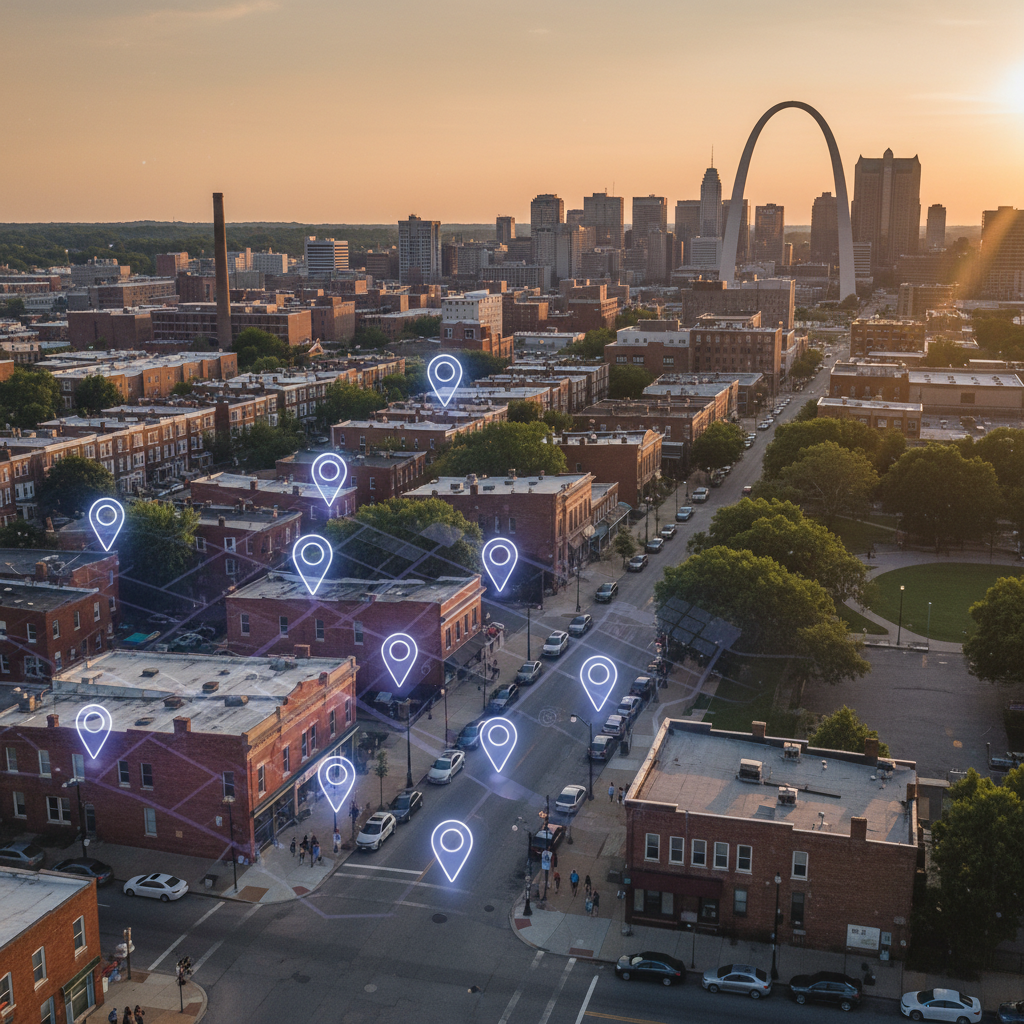
How to Build a Collaborative Digital Ecosystem in Your St. Louis Neighborhood
Most St. Louis businesses approach digital marketing like isolated islands, each fighting for visibility alone. But what if your neighborhood restaurants, shops, and service providers worked together? St Louis Near Me Directory has seen firsthand how collaborative digital ecosystems can triple local search visibility while cutting individual marketing costs by 40%.
This guide walks you through building a neighborhood business collective that dominates "near me" searches together. You'll learn to pool resources, share digital tools, and create a rising tide that lifts all local boats.
What You'll Learn
By the end of this guide, you'll know how to:

- Establish a neighborhood business collective with clear digital goals
- Create shared content calendars that amplify everyone's reach
- Cross-promote effectively without appearing spammy
- Pool resources for professional digital services
- Track collective ROI and adjust strategies based on real data
Prerequisites: What You Need Before Starting
Before diving into collaborative digital marketing, ensure you have:

- 3-8 committed businesses within a 0.5-mile radius willing to participate
- Basic Google Business Profiles for each participating business
- Shared communication platform (WhatsApp group, Slack, or Facebook group)
- Monthly time commitment of 2-3 hours per business owner
- Small budget allocation ($50-200/month per business for shared tools)
Common prerequisite mistake: Don't wait for "perfect" businesses. A mix of complementary services (restaurant + dry cleaner + fitness studio) often works better than similar businesses competing directly.
Step 1: Map Your Neighborhood Digital Landscape
Start by understanding what already exists in your area. Create a simple spreadsheet tracking:

- All businesses within 0.5 miles - Name, category, Google rating, online presence quality
- Existing collaborations - Chamber memberships, business associations, informal partnerships
- Digital gaps - Which businesses have weak online presence? Who's missing from local searches?
- Complementary services - Map natural referral opportunities (hair salon → nail technician → massage therapist)
Pro tip: Use Google Maps in incognito mode to see how your area appears to new customers. Search "restaurants near [your address]" and "services near [your address]" to identify who's visible and who isn't.
Step 2: Establish Your Collective Digital Foundation
Create the infrastructure for collaboration before diving into tactics:

Choose Your Core Platform
Most successful St. Louis neighborhood collectives use a two-tier approach:
- Quick communication: WhatsApp group for daily updates, event coordination
- Content planning: Shared Google Calendar for posting schedules, events, promotions
Define Collaboration Rules
Set clear expectations upfront:
- Posting frequency: Each business commits to 2 cross-promotional posts monthly
- Content standards: Professional photos, positive messaging, no direct competitor mentions
- Reciprocity requirements: If Business A promotes Business B, Business B promotes Business A within 30 days
- Opt-out policy: 30-day notice for leaving the collective
Pool Resources for Professional Tools
Individual businesses often can't justify $200/month marketing tools. But 6 businesses splitting costs makes professional platforms affordable:
- Shared social media scheduler (Hootsuite, Buffer) - $30/month split 6 ways = $5/business
- Professional photo sessions - $600 photographer for all businesses = $100/business
- Content creation tools (Canva Pro, Adobe Creative) - $20/month shared login
Step 3: Create Shared Content That Drives Traffic
The magic happens when businesses create content that promotes the entire neighborhood, not just themselves.

Neighborhood Event Amplification
When one business hosts an event, everyone promotes it:
- Create event graphics featuring multiple business logos
- Cross-post on all social channels with neighborhood hashtags (#SoulardEats, #CentralWestEndLocal)
- Add to Google Business Posts for every participating business
- Share event in local Facebook groups - each business posts in different groups to avoid spam flags
"Best of the Neighborhood" Content Series
Create monthly themed content showcasing multiple businesses:
- "Date Night in [Neighborhood]" - Restaurant + entertainment + parking tips
- "One-Stop Saturday" - Coffee + shopping + services route
- "Family Fun Day" - Kid-friendly businesses working together
Each business shares the same content with their personal take: "Stop by [Business Name] during your Saturday route!"
Google Business Profile Cross-Promotion Strategy
Use Google Posts strategically to boost collective visibility:
- Coordinate posting times - All businesses post within 2-hour window for maximum local buzz
- Use identical neighborhood hashtags - Creates local trending effect
- Include subtle business mentions - "Perfect before/after your visit to [nearby business]"
- Link to each other's profiles - Google sees this as local authority signals
Step 4: Implement Directory and Citation Collaboration
Individual citation building is expensive and time-consuming. Collective approaches make it affordable and effective.
Shared Directory Submissions
Pool resources to get professional directory placement:
- St Louis Near Me Directory group membership - Negotiate group rates for Gold or Platinum plans
- Shared citation service - Professional service submitting all businesses simultaneously costs less per business
- Industry-specific directories - Split costs for restaurant guides, service directories
Local Authority Building
Create neighborhood-focused content that builds authority for everyone:
- "Neighborhood Guide" blog posts - Each business contributes content about their expertise
- Local news collaboration - Approach St. Louis media as a business district rather than individual companies
- Community event sponsorship - Pool money for bigger sponsorship opportunities that mention all businesses
Step 5: Track Collective Performance and Adjust
Measure what matters to ensure your collective efforts pay off.
Key Metrics to Track Monthly
- Google Business Profile views for each business - Look for general increases after collaborative posts
Monitoring performance metrics on platforms like Google Business Profile can provide valuable insights into local search visibility and customer engagement 1.
- "Near me" search rankings - Track position for key terms monthly
- Cross-referral traffic - Ask new customers how they found you
- Social media engagement - Collaborative posts often aim for increased engagement compared to solo posts
- Directory traffic - Monitor clicks from shared directory listings
Quarterly Strategy Adjustments
Review performance and adapt strategies:
- Identify top-performing content types - Double down on what works
- Analyze referral patterns - Which business partnerships drive most traffic?
- Adjust posting schedules - Find optimal times for your neighborhood
- Expand successful tactics - If Google Posts work, add more platforms
Pro Tips for Long-Term Success
Avoid These Common Collaborative Mistakes
- Don't over-promote - Keep cross-promotion to a reasonable percentage of your content
- Don't ignore quality control - One business's poor content reflects on everyone
- Don't skip individual optimization - Collaborative efforts amplify good individual presence, they don't replace it
- Don't forget legal boundaries - Avoid anything that looks like price fixing or market manipulation. The Federal Trade Commission (FTC) provides guidance on antitrust laws for businesses 2.
Scale Gradually for Sustainability
Start with 3-4 committed businesses and prove the concept before expanding. At St Louis Near Me Directory, we've seen collectives grow from 4 businesses to 15+ over 18 months, but those that started too big often fell apart within 6 months.
Make It Personal and Authentic
The best neighborhood business ecosystems feel like actual communities, not marketing schemes. Celebrate each other's wins, support during challenges, and remember that authentic relationships drive better business results than purely transactional collaborations.
Troubleshooting Common Issues
Problem: Unequal Participation
Solution: Track participation monthly and address imbalances quickly. Create a simple point system (1 point for cross-promotion post, 2 points for event collaboration) and discuss if someone falls below 50% of group average.
Problem: Conflicting Business Interests
Solution: Establish clear guidelines about competitor participation upfront. Generally, businesses serving different customer needs can collaborate (pizza place + Mexican restaurant), but direct competitors need separate collectives.
Problem: Content Quality Inconsistency
Solution: Create content templates and approve collaborative posts before publishing. One poorly written post can hurt everyone's reputation.
Problem: ROI Disputes
Solution: Track individual metrics alongside collective ones. Some businesses will see faster results due to their industry or current online presence. Focus on collective growth trends over 6-month periods rather than month-to-month comparisons.
Frequently Asked Questions
How many businesses should participate in a neighborhood collective?
The sweet spot is 4-8 businesses. Fewer than 4 lacks critical mass for real impact. More than 8 becomes difficult to coordinate and dilutes individual attention. Start with 4 committed businesses and grow gradually.
How long before we see results from collaborative digital marketing?
Most St. Louis neighborhood collectives see initial improvements in 6-8 weeks, with significant impact after 3-4 months. Google Business Profile views typically increase first, followed by search ranking improvements, then measurable foot traffic increases.
What if a competitor wants to join our established collective?
Handle this case-by-case. Direct competitors (two pizza places) usually can't collaborate effectively. But businesses serving different market segments (fast-casual vs. fine dining) often can. Consider the customer overlap and whether both businesses can genuinely promote each other.
How much should each business contribute financially?
Most successful collectives budget $75-150 per business monthly for shared tools, professional services, and collaborative marketing. This covers shared software, occasional professional photography, and group directory memberships while remaining affordable for small businesses.
Can we use this approach if we're not all in the same exact location?
Yes, but stay within a clear neighborhood boundary (typically 0.5-1 mile radius). Customers need to see the businesses as part of the same area for cross-referrals to work naturally. "Central West End businesses" works better than "businesses within 3 miles of downtown."
Ready to Build Your Neighborhood Digital Ecosystem?
Creating a collaborative digital ecosystem takes coordination, but the results speak for themselves. Neighborhood business collectives consistently outperform isolated marketing efforts while building genuine community connections that last beyond any single campaign.
Start with one neighboring business owner and propose a simple collaboration - maybe cross-promoting each other's next event. Once you see the impact, expanding to a full neighborhood collective becomes much easier to organize and justify.
The businesses that thrive in St. Louis understand that community success drives individual success. Stop competing alone and start collaborating to dominate your neighborhood's "near me" searches together.
📅 Upcoming Events & Webinars
Stay updated with our latest Hyper-local integrated business ecosystem for St. Louis St. louis neighborhood guides events, workshops, and industry insights.
View Our Calendar →Related Resources
- St Louis Near Me Directory - Expert Resource
- Hyper-local integrated business ecosystem for St. Louis St. louis neighborhood guides Data & Analysis
- Hyper-local integrated business ecosystem for St. Louis St. louis neighborhood guides Presentation
- Hyper-local integrated business ecosystem for St. Louis St. louis neighborhood guides Events
- Hyper-local integrated business ecosystem for St. Louis St. louis neighborhood guides Resources
- Hyper-local integrated business ecosystem for St. Louis St. louis neighborhood guides GitHub Resources
- Hyper-local integrated business ecosystem for St. Louis St. louis neighborhood guides Blog Post
- Hyper-local integrated business ecosystem for St. Louis St. louis neighborhood guides Service Area Map


No comments:
Post a Comment
Note: Only a member of this blog may post a comment.