
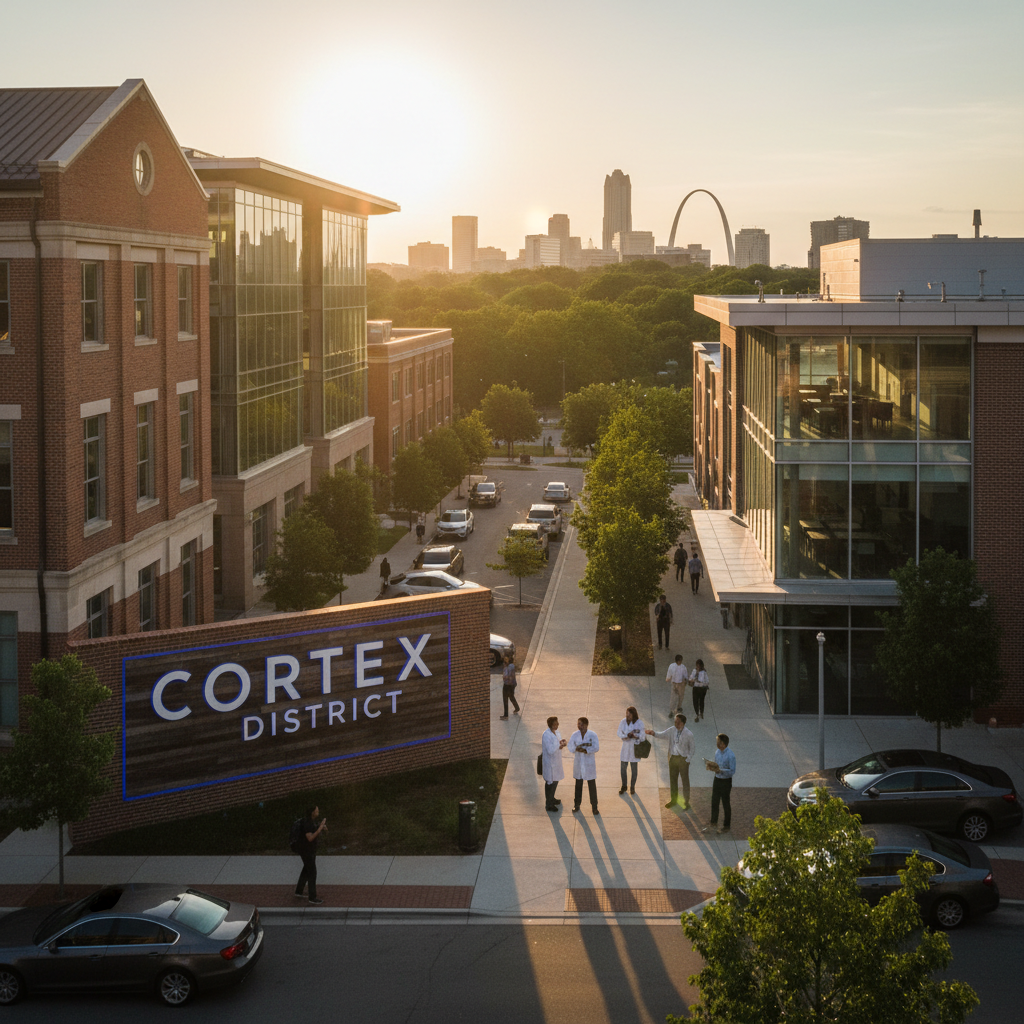
Cortex District Entrepreneurial Support: Complete Program Comparison Guide 2024
When evaluating entrepreneurial support programs in St. Louis, most founders get overwhelmed by marketing claims without understanding the real differences between options. At St Louis Near Me Directory, we've tracked how different accelerators and support programs serve the local startup ecosystem. The truth? Each program serves distinct founder needs and business stages.
The innovation district model that Cortex pioneered creates unique advantages through anchor institution partnerships, but it's not the only path to startup success in our region.
Quick Navigation: Find Your Program Match
Different entrepreneurial support programs serve different founder profiles:

- Early-stage tech founders: SQ1 Ignite vs. Arch Grants comparison
- Biotech/MedTech startups: Cortex specialized tracks vs. BioGenerator
- General business acceleration: SQ1 Bootcamp vs. UMSL Accelerate
- Corporate innovation partnerships: Cortex anchor programs vs. WashU Skandalaris Center
Understanding these distinctions helps founders make strategic choices rather than applying everywhere and hoping for the best.
SQ1 Program Deep Dive: Cortex's Three-Tier Approach
Cortex's SQ1 program operates on a progression model that differs significantly from traditional accelerators. Here's how each component works:

SQ1 Ignite: Foundation Building
This 8-week program focuses on business model validation with weekly sessions covering customer discovery, market analysis, and pitch development. Unlike Arch Grants' immediate funding approach, SQ1 Ignite emphasizes structured validation before capital introduction.
SQ1 Bootcamp: Acceleration Phase
The 12-week intensive program provides mentorship matching, weekly progress reviews, and access to Cortex's anchor institution network. Participants receive desk space within the district and structured introductions to potential customers among the 6,000+ employees working in Cortex companies.
SQ1 Enrichment: Post-Program Support
This ongoing component provides alumni access to continued mentorship, networking events, and follow-on funding opportunities. Participation in post-program support initiatives is often associated with improved retention in local communities, which can be beneficial for regional economic development [1]. Research on similar programs suggests that structured post-graduation support can significantly increase participant retention in a given region [2].
Program Comparison Matrix: Making Strategic Choices
| Program | Duration | Equity Required | Industry Focus | Funding Access | Mentor Ratio |
|---|---|---|---|---|---|
| Cortex SQ1 Bootcamp | 12 weeks | 0% during program | Tech/biotech emphasis | Demo day + network | 3:1 |
| Arch Grants | Ongoing | 0% | Industry agnostic | $50K direct grant | Variable |
| BioGenerator | Variable | Equity investment | Life sciences only | Seed to Series A | 1:1 dedicated |
| UMSL Accelerate | 10 weeks | 0% | Student/alumni focus | Competition prizes | 5:1 |
| WashU Skandalaris | Semester-based | 0% | University spin-offs | Academic + angel network | 2:1 |
Industry-Specific Innovation Tracks: Specialized Support Paths
Cortex's industry specialization creates advantages for certain startup types that general accelerators can't match:

BioTech/MedTech Specialization
Direct partnerships with Washington University School of Medicine and BJC Healthcare provide clinical trial access, regulatory guidance, and potential customer validation that generic accelerators lack. The co-location with Pfizer, Microsoft, and other anchor tenants creates natural pilot opportunities.
FinTech and AgTech Emerging Tracks
Recent expansion into financial technology and agricultural innovation reflects St. Louis's position as a major agricultural trading center and financial services hub. These tracks connect startups with Monsanto (now Bayer), Edward Jones, and regional banking institutions for industry-specific mentorship.
Geospatial Technology Focus
The National Geospatial-Intelligence Agency's new headquarters creates unique opportunities for startups in mapping, satellite imagery, and location analytics. This specialization exists nowhere else in the region's entrepreneurial support ecosystem.
Real Success Metrics: Beyond the Marketing Claims
When evaluating entrepreneurial support programs, look beyond graduation rates to understand actual outcomes:

Post-Program Funding Statistics
SQ1 Bootcamp alumni have secured substantial follow-on funding since 2019, demonstrating an ability to attract investment post-graduation. This can be compared to programs like Arch Grants, which provide initial funding but may see varying follow-on investment rates.
Job Creation and Revenue Growth
The Cortex Innovation Community, where many startups operate, is a significant economic driver for the St. Louis region. A 2022 report by Cortex St. Louis highlighted that companies within the district collectively employed 5,690 people and generated $2.1 billion in economic output in 2021 alone.
Regional Retention Rates
A key indicator of local economic impact is the ability of programs to retain participating businesses in the region. Many St. Louis-based programs aim to keep companies operating locally post-program, which is crucial for regional economic development.
Corporate Innovation Partnership Opportunities
Cortex's anchor institution model creates unique B2B collaboration pathways that traditional accelerators can't provide:

Technology Transfer Mechanisms
Direct relationships with Washington University's Office of Technology Management and Saint Louis University's research commercialization office streamline intellectual property licensing for university spin-offs. This removes typical 6-12 month negotiation timelines.
Pilot Program Partnerships
Established procurement relationships with BJC Healthcare, Centene Corporation, and other anchor tenants create structured pathways for startups to test products with large-scale customers. These pilot opportunities include defined success metrics and potential purchase commitments.
Corporate Innovation Lab Collaborations
Microsoft's Cortex presence includes dedicated innovation lab space where startups can access enterprise software platforms and technical expertise. Similar arrangements exist with other anchor tenants, creating advantages unavailable through traditional accelerator programs.
Decision Framework: Choosing Your Path
Use this framework to evaluate which entrepreneurial support program matches your specific situation:
- Funding Timeline: Need immediate capital? Consider Arch Grants. Can invest 12 weeks in validation? SQ1 Bootcamp provides stronger long-term outcomes.
- Industry Alignment: Life sciences startups benefit more from BioGenerator's specialized support than general programs.
- Geographic Commitment: Programs requiring local presence (like Cortex) provide deeper community integration but limit geographic flexibility.
- Corporate Customer Access: Startups selling to large enterprises should prioritize programs with established procurement relationships.
- Post-Program Support: Evaluate ongoing alumni benefits, as many founders need continued support beyond initial acceleration.
At St Louis Near Me Directory, we've seen founders succeed through multiple pathways. The key is matching program structure to your specific business needs rather than applying broadly.
Getting Started: Application Strategy and Timeline
Most successful applicants to competitive entrepreneurial support programs follow a structured approach:
Application Timeline Planning
SQ1 programs typically open applications in January and September, with 6-week review cycles. Arch Grants accepts rolling applications but reviews quarterly. Plan application timing around your business milestones, not just program deadlines.
Eligibility Requirements Comparison
Each program has specific eligibility criteria that founders often overlook. SQ1 requires technology-based business models, while Arch Grants accepts any scalable venture. BioGenerator focuses exclusively on life sciences with intellectual property components.
What Programs Actually Evaluate
Beyond business plans, selection committees evaluate founder coachability, market timing, and competitive positioning. Programs like Cortex's SQ1 particularly value founders who can articulate how anchor institution partnerships accelerate their go-to-market strategy.
Ready to explore entrepreneurial support options? Our directory includes detailed profiles of local accelerators, incubators, and funding sources tailored to St. Louis founders. We help connect entrepreneurs with resources that match their specific industry, stage, and growth objectives.
Frequently Asked Questions
What makes Cortex District entrepreneurial support different from other accelerators?
Cortex's anchor institution model provides direct access to large corporate customers, university research partnerships, and specialized industry mentorship that traditional accelerators can't match. The three-tier SQ1 program structure allows founders to engage at their appropriate development stage.
How do I choose between SQ1 Bootcamp and Arch Grants?
Choose SQ1 if you need structured mentorship, corporate customer access, and can commit to 12 weeks of intensive programming. Choose Arch Grants if you need immediate funding and prefer flexibility in program engagement. Many successful founders actually participate in both programs sequentially.
Can founders participate in multiple St. Louis entrepreneurial support programs?
Yes, most programs encourage complementary participation. Common combinations include Arch Grants funding with SQ1 mentorship, or university incubator programs followed by Cortex acceleration. Avoid overlapping intensive programs that compete for your time and attention.
What industries get the most value from Cortex District programs?
Biotech, medtech, and B2B software companies benefit most from Cortex's anchor institution relationships. Consumer products and service businesses may find better fits with other local programs unless they're targeting corporate customers within the district.
How important is it to be located physically in the Cortex District?
Physical presence significantly impacts program benefits. Co-location enables spontaneous networking, easier mentor access, and natural customer discovery among the 6,000+ district employees. Remote participation limits these advantages but doesn't eliminate program value entirely.
📅 Upcoming Events & Webinars
Stay updated with our latest cortex district entrepreneurial support events, workshops, and industry insights.
View Our Calendar →Related Resources
- St Louis Near Me Directory - Expert Resource
- cortex district entrepreneurial support Data & Analysis
- cortex district entrepreneurial support Presentation
- cortex district entrepreneurial support Events
- cortex district entrepreneurial support Resources
- cortex district entrepreneurial support GitHub Resources
- cortex district entrepreneurial support Blog Post
- cortex district entrepreneurial support Service Area Map


No comments:
Post a Comment
Note: Only a member of this blog may post a comment.